
"coffee yield per tree"
800 article(s) found

Introduction to the characteristics of Yunnan Tieka Coffee Flavor Manor
The so-called new variety actually refers to catimor, which is a hybrid of timor and Arabica from the Roberta family. Compared with the old variety, it lacks rich aroma and taste, and has a relatively shallow smell of grass and soil, but it has the advantages of resistance to diseases and insect pests, easy management and high yield, and its yield per mu is up to 350kg, which is twice that of the old variety.

Introduction to the characteristics of Yunnan "small Coffee" Tieka Coffee Flavor Manor
So when Nestl é succeeded in promoting high-yield new varieties in Pu'er in the 1990s, brown farmers in Baoshan also cut down the old varieties and changed them to new ones. With a round of coffee expansion, the new varieties increased and the old varieties decreased day by day. Finally, today's situation: the old varieties have almost been cut down, and the little ones that survived are old, weak, sick and old.

High-quality coffee bean producing countries recommend Guatemala
The extra-hard coffee beans here are full-grained, delicious and balanced, and the pure Guatemala coffee once enjoyed a reputation as the best quality coffee in the world, but its quality also declined for a time. However, it is gratifying that its reputation is gradually being restored. In 1750, Father Jesuit introduced coffee trees to Guatemala and Germany at the end of the 19th century.

What are the coffee producing areas in Ecuador? How to rinse and boil the soybeans from the producing area of Samora, Ecuador
Professional coffee knowledge exchange more coffee bean information please follow the coffee workshop (Wechat official account cafe_style) which coffee producing areas in Ecuador? How to rinse and boil beans from Ecuador's Samora region? Coffee cultivation in Ecuador covers an area of 305.000 hectares, of which Arabigo coffee accounts for 68 per cent and Robusta coffee accounts for 32 per cent. Coffee

Introduction to the manor producing area of Costa Rican boutique coffee beans with unique strong flavor
Coffee was introduced into Costa Rica from Cuba in 1729. Today, its coffee industry is one of the well-organized industries in the world, with a yield of 1700 kg per hectare. Costa Rica has only 3.5 million people but 400m coffee trees, and coffee exports account for 25 per cent of the country's total exports. The volcanic soil of Costa Rica is very fertile and well drained, especially in the central part.

Flavor description of Coffee beans in Saint Roman Manor, Costa Rica
Coffee was introduced into Costa Rica from Cuba in 1729. Today, its coffee industry is one of the well-organized industries in the world, with a yield of 1700 kg per hectare. Costa Rica has only 3.5 million people but 400m coffee trees, and coffee exports account for 25 per cent of the country's total exports. The volcanic soil of Costa Rica is very fertile and well drained, especially in the central part.
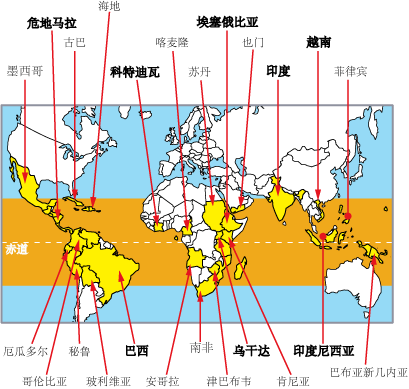
Coffee producing area 53 global coffee producing area Guatemala 53 coffee producing area
Here in Guatemala, the extra-hard coffee beans are full-grained, delicious and balanced, and the pure full-bodied Guatemalan coffee once enjoyed a reputation as the best quality coffee in the world, but its quality also declined for a time. However, it is gratifying that its reputation is gradually being restored. In 1750, Father Jesuit introduced coffee trees to Guatemala.

Introduction to the characteristics and Flavor description of Yunnan Iron Card Fine Coffee beans
Introduction to the taste treatment method of Yunnan Tieka boutique coffee beans, so when Nestl é succeeded in promoting high-yield new varieties in Pu'er area in the 1990s, brown farmers in Baoshan area also cut off the old varieties and changed to new varieties one after another. with a round of coffee expansion, new varieties are increasing, old varieties are decreasing, and finally to today's situation: old varieties are almost

A brief introduction to the Calibration of Coffee Bean Flavor description treatment in Yerzaro, Costa Rica
Coffee was introduced into Costa Rica from Cuba in 1729. Today, its coffee industry is one of the well-organized industries in the world, with a yield of 1700 kg per hectare. Costa Rica has only 3.5 million people but 400m coffee trees, and coffee exports account for 25 per cent of the country's total exports. The volcanic soil of Costa Rica is very fertile and well drained, especially in the central part.
Specialty Coffee Concept (II)
In fact, there is another reason for the gradual rise of the concept of specialty coffee. It is that coffee producing countries have changed some coffee trees with strong pest resistance and high yield per plant due to the increase in consumption demand. However, they have forgotten that the taste of coffee beans produced in this way has changed. That is, they have forgotten the pursuit of quantity improvement, but they have forgotten the pursuit of taste.

Coffee grown in Casadra Manor in Veracruz, Mexico
Professional coffee knowledge exchange more coffee bean information please pay attention to the coffee workshop (Wechat official account cafe_style) Mexico is located in the northern end of Central America, the uppermost edge of the coffee production belt, Mexico coffee producing areas from the north of coatepec (Cotepe) and veracruz (Veracruz), the central is the Oaxac (Oaxaca) producing area of Pluma coffee, the southernmost end is and melon.

Which brand of Yunnan small grain coffee is good? How much is a can of Yunnan small coffee?
Professional coffee knowledge exchange more coffee bean information please follow the coffee workshop (Wechat official account cafe_style) the average coffee consumption in the world is 30 to 40 cups per person per year, while the average annual coffee consumption in China is only 3 to 4 cups. But China's annual coffee consumption is growing at a rate of 20 per cent, well above the global average of 2 per cent. The market space is huge. Can be native

The most famous coffee in Laos is Laotian coffee. Cultivated flavor characteristics Taste description
Professional coffee knowledge exchange More coffee bean information Please pay attention to coffee workshop (Weixin Official Accounts cafe_style) Lao coffee produced to Laos. Before the emergence of Taiwan coffee enterprises, Lao coffee rarely appeared in Taiwan's green bean trade system. However, coffee cultivation in Laos also began before World War II. In 1927, 90% of the volcano in Laos
How much is Ethiopian coffee beans?
Professional coffee knowledge exchange More coffee bean information Please pay attention to coffee workshop (Weixin Official Accounts cafe_style) In the past two years, Ethiopian coffee represented by Yejia Shefei has been sought after by many coffee lovers. Many people who like to drink coffee express that they are very amazing and unforgettable after drinking high-quality Yejia Shefei. The word yirgacheffe has also become more pronounced.

The unique strong flavor of Costa Rican Coffee Manor introduces the Goddess Manor.
Coffee was introduced into Costa Rica from Cuba in 1729. Today, its coffee industry is one of the well-organized industries in the world, with a yield of 1700 kg per hectare. Costa Rica has only 3.5 million people but 400m coffee trees, and coffee exports account for 25 per cent of the country's total exports. The volcanic soil of Costa Rica is very fertile and well drained, especially in the central part.
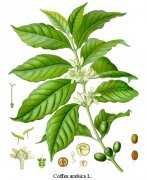
Coffee cultivation techniques detailed explanation of planting knowledge of Coffee trees
Coffee, cocoa and tea are called the three major beverages in the world, and their output, consumption and output value all rank first. In addition to being used as a beverage, coffee can also extract caffeine and coffee oil; in medicine, it can be used as an anesthetic, stimulant and diuretic cardiotonic agent. Coffee pulp can be used to make wine, vinegar, pectin and molasses; dried pulp can be used as animal feed; dried fruit shell can be used as fertilizer and burning

Fresh Hawaiian Kona Coffee Flavor and Taste introduction to Hawaiian Coffee
Hawaii's coffee industry has to compete with the expanding tourism industry. Most coffee is grown on the slopes of MaunaLoa. Mauna Loa was originally a volcano located in the western part of the Kona region on the island of Hawaii. The coffee producing area is about 30 kilometers long and its growing areas are mainly concentrated in the north and south of the area. Coffee trees are planted in relatively desolate areas, but they
The type of coffee and its taste coffee variety Daquan coffee beans have the best flavor
According to biology, coffee varieties are divided into three major varieties: Arabica, Robusta, and Liberika. Arabica is one of the best flavor of coffee beans, it is currently recognized as the representative of boutique coffee. Arabica coffee accounts for 70% of the total output of economically grown coffee in the world, which is us.

Introduction of varieties and characteristics of Yega Shifeiwaka Coffee Bean Flavor description method
But there are also a small number of excellent beans engraved in the sun to enhance the charming fruit aroma and mellow thickness. These mountain villages are foggy, like spring all year round, with a gentle breeze in summer, cool but not hot, rain but not damp, and no cold damage in winter, giving birth to a unique regional flavor of citrus and flowers. Coffee trees are mostly planted in farmers' own backyards or mixed with other crops in the field, and the yield per household is small.

Introduction of Coffee Flavor description in Fenghuang Manor, Costa Rica
Coffee was introduced into Costa Rica from Cuba in 1729. Today, its coffee industry is one of the well-organized industries in the world, with a yield of 1700 kg per hectare. Costa Rica has only 3.5 million people but 400m coffee trees, and coffee exports account for 25 per cent of the country's total exports. The volcanic soil of Costa Rica is very fertile and well drained, especially in the central part.